
How to claim Police Health orthodontics

In shortPolice Health's cover can help reduce the cost of Orthodontics (braces) treatment, but it's important to know the best way to pay for it. |
On this page
- How much does Police Health pay?
- Why you should get a quote first
- Payment options
- How to claim
- Frequently asked questions
How much does Police Health pay?
For a full course of active orthodontic treatment, Police Health pays 80% of the cost up to $1,500 per calendar year, up to a lifetime limit of $3,000.*
This is important to remember because if your total orthodontic treatment costs $7,000, the most you can claim back from Police Health in 1 calendar year is $1,500.
You then have to wait until the next calendar year to claim the remaining $1,500 and reach your lifetime limit of $3,000.
Getting a quote
You should contact us before starting orthodontic treatment because we can tell you how much we'll cover and what you'll have to pay for.
Before you contact us, get a quote from your dentist or orthodontist for your proposed treatment.
It also needs to outline how long your treatment goes for and how you will be billed.
This will help us show how much you can claim back each calendar year of the treatment, and what you'll need to pay.
Payment options
There are different ways to pay for orthodontic treatments, and below are some examples.
These relate to a complete course of orthodontic treatment and assume that the relevant waiting periods have been served and that you have your full $3,000 lifetime limit available.
If you know how you want to pay, skip ahead to our 'How to claim' section.
Example 1 – paying up front
In July 2025, Ben was billed $5,000 for his son's orthodontic treatment (braces) and wants to pay the orthodontist up front.
In that year, Police Health pays $1,500. In January 2026 Ben makes another claim for that same treatment and Police Health pays another $1,500.
This means he's maximised his son's $3,000 orthodontic lifetime limit.
Example 2 – paying in installments
In August 2025, Sarah was billed $6,000 for her daughter's orthodontic treatment (braces) and agrees with the orthodontist to pay it off over 24 months.
In that year, Police Health pays 80% of the service fee on each installment until she reaches the $1,500 calendar year limit.
From January 2026, Police Health pays 80% of the service fee on each installment until she reaches the $1,500 of the 2026 calendar year limit.
Paying a deposit
You can also pay a deposit for your orthodontic treatment, which works like paying in installments.
How to claim
There are also different ways to pay for orthodontic treatment and to make claims with Police Health.
HICAPS
This is the easiest way to claim, simply swipe your Police Health membership card at the HICAPS machine.
Police Health pays your benefit instantly, this is applicable for paying up front or paying in installments.

How much does it cost to go to the dentist?
Paying the dentist or orthodontist and claiming with Police Health
If you can't pay via HICAPS, you'll need to pay your dentist or orthodontist and then submit a claim to Police Health through our app.
This is for either paying up front or paying in installments, and when you claim you'll need an Itemised Tax Invoice from the dentist or orthodontist which has the following information.
| Information | Description |
|---|---|
| Provider number |
A provider number directly identifies the practitioner providing the service. It’ll generally be a combination of seven numbers followed by a letter or two. Example: 1234567AB. |
| Provider’s details | Their address and phone number. |
| Item numbers provided in the service | These will generally be three-digits and start with an eight. |
| Patient’s name | This one is fairly self-explanatory, but it’s still worth checking it has been included. |
| Charges and/or cost | If paying in installments this won’t be the full price for the course of orthodontic treatment, instead the amount you’re submitting this particular claim for. |
| Date of service | This is the date the service was provided, not the date you’re submitting the claim. |
How to submit a claim with the Police Health App
- Obtain a copy of your Itemised Tax Invoice from the dentist or orthodontist
- If the invoice is printed, take a photo of it. Download it if it's emailed as a PDF
- Login to the Police Health App (if you haven't already, download the app)


- Select the claiming icon from the bottom menu

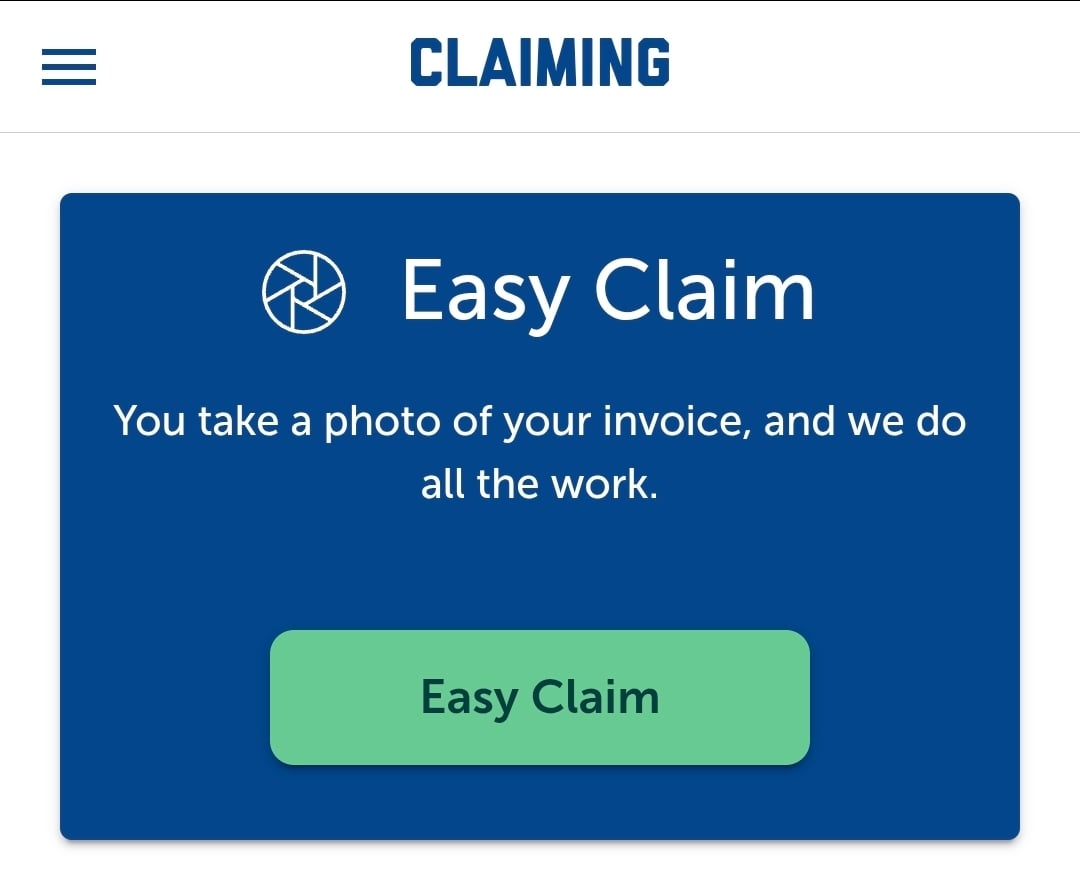
- Select Easy Claim
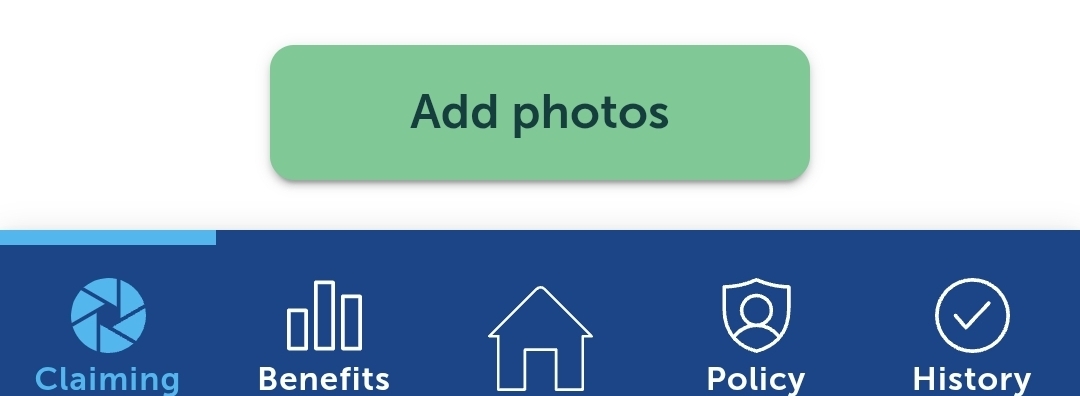
- Select Add photos
- Select that it wasn't related to an inpatient hospital admission
- Select ‘Select image or PDF
- Select from the following; Load from Library (you've already taken a photo), Use Camera (take a photo on your phone) or Select PDF
- Select whether the account has been paid (Have you already paid for the orthodontic treatment payment you're claiming?
- Select ‘Next’
- Check your details are correct, read the terms of submitting a claim and check the checkbox

- Select Submit Claim
Financial statements and receipts
It's important to remember that we don't accept the following when assessing an orthodontics claim;
- Direct Debit Statements
- Financial Statements from a finance provider
- Receipts
Our orthodontic services, which include corrective appliances such as braces and plates, are covered under Rolling Extras and Gold Combined. No, we don't have preferred providers so you'll receive the same benefits at all recognised providers. Yes - clear aligners, such as Invisalign, are covered under our orthodontic services, on condition that the service is provided by a recognised provider. However, we don't cover clear aligners (or any other orthodontic treatment) that are purchased online or overseas, or when the service is not provided in a face-to-face environment. We’ll pay the same benefit whether the service is provided by an orthodontist or general dentist – so long as they’re a recognised provider. Yes, to be eligible to claim benefits for orthodontic services, a 12-month waiting period must have been served prior to the date of the treatment. If you’ve held Rolling Extras or Gold Combined cover with us for 12-consecutive-months leading up to your orthodontic treatment (and you haven’t already exhausted your orthodontic lifetime limit) you’d be eligible to receive orthodontic benefits. If you recently transferred from another fund, we offer continuity of cover so you don't lose the time you've already served on waiting periods. No, we offer continuity of cover, so you don't lose the time you've already served on waiting periods – they switch with you. That means if you previously held orthodontics cover for 12-months at your previous fund, you’d be eligible to claim on orthodontic services with us. This is the total amount of benefits you can receive for orthodontic treatment in your lifetime. That means once you’ve claimed your lifetime limit for orthodontic services, the limit will never reset, even if you change health funds. With us, orthodontic services is its own modality – it’s not grouped with major dental or any other service. No, we will not pay benefits on any orthodontic services you received prior to serving your waiting periods. For example, if you finished serving your 12-month waiting period on 1 July 2022, we would not pay benefits towards any orthodontic service with a date of service prior to 1 July 2022. You can check this on the Police Health App or the Online Member Portal. We recommend members go through the following checklist; Orthodontics FAQs